
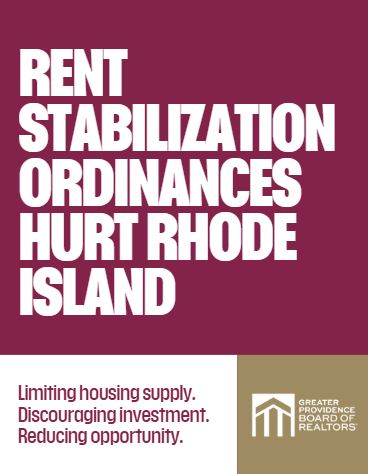
 Housing affordability challenges are affecting cities and towns across the U.S., and Providence, Rhode Island is no different. The Greater Providence Board of REALTORS® (GPBOR) is dedicated to helping renters and expanding housing opportunities, but when the City Council voted to put controls in place in response to rising rental rates this spring, the ordinance they proposed raised all sorts of red flags. Though the mayor vetoed the bill, the REALTORS® found themselves leading a coalition to prevent the council’s progressive faction from overturning that decision. An Issues Mobilization Grant from the REALTOR® Party, together with support from the state association, helped launch a vigorous campaign to expose the downsides of the rent-control ordinance and prevent a ten-member majority of the council from making it law.
GPBOR CEO Suzanne Silva notes that the board had been keeping a close eye on how rent control was playing out in Portland, Maine, as well as on a proposed statewide rent-control referendum that was poised to be placed on the ballot in Massachusetts in November. On the homefront in Providence, rent control proponents wanted a 4% annual rent-increase cap, plus the creation of a politically appointed Rent Control Board to oversee requests from landlords seeking exemptions. As Silva explains, “There was no transparent discussion of how this would be funded, but an analyst hired by the city determined that the new policy – a new board plus the resulting erosion of property values – would shift a multi-million-dollar tax burden onto residential homeowners.”
During the public discussion period, a REALTOR®-led coalition sent letters to City Council members, spelling out the objections to the Providence Rent Stabilization Ordinance. Not only were the finances unclear, but it promised a drastically destabilizing effect for the city’s landlords, many of whom own single two-to-four-unit buildings and depend on stable conditions to operate them, says Silva. “We’d be looking at price controls and regulatory uncertainty that would discourage reinvestment in existing housing, reduce future housing development, and ultimately worsen housing affordability in Providence by limiting supply. Regardless of how it controlled rental rates, the ordinance was sure to have a dangerous impact on housing overall.”
Once it was clear that the mayor’s veto was in jeopardy, the REALTORS® sprang into action with support from both the state association and an Issues Mobilization Grant from the REALTOR® Party. GPBOR created a multi-media digital campaign featuring a website landing page and social media advertising focused on members and principal brokers with headquarters in Providence, to ensure the message was reaching constituents of targeted council members.
It was very much a group effort, asserts Silva. Housing providers, REALTORS®, community stakeholders, and local property owners worked together around a shared objective of improving affordability through increased housing supply. An important boost came from the city’s Latino landlords, she notes: “They testified about having come to the U.S. and buying multi-generational homes, which have been the basis of their financial stability. By stating ‘This is us fulfilling the American Dream!’, they helped to humanize housing providers and counter the image of slick corporate landlords that the rent-control proponents were pushing.”
The campaign of education and advocacy succeeded when the City Council’s last-ditch effort to overturn the mayor’s veto failed by one vote. Looking ahead, says Silva, “GPBOR is committed to working with city leaders on policies that expand housing opportunities while protecting both renters and property owners.”
To learn more about how REALTORS® are working to protect property owners and optimize conditions for much-needed housing production in Rhode Island’s capital city, contact Suzanne Silva, RCE, Chief Executive Officer of the Greater Providence Board of REALTORS®, at ssilva@gpbor.realtor or 401.274.8383.
Post a comment